Your Guide to the Employee Time Sheets Logbook Manuscript
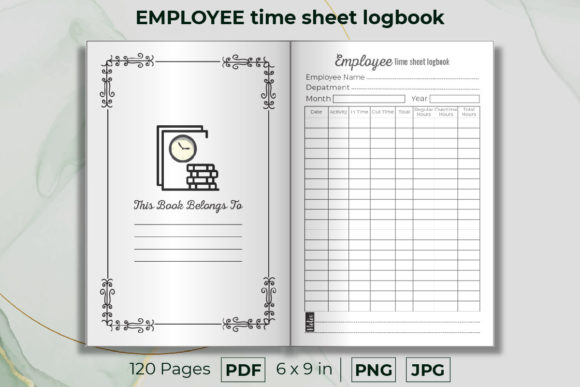
When the workday feels like a blur of tasks, meetings, and unexpected interruptions, keeping track of your hours can become surprisingly stressful. Whether you're managing a small team, running a freelance operation, or simply trying to organize your own productivity, a reliable time-tracking system is foundational. The Employee Time Sheets Logbook Manuscript is a purpose-built digital template designed to solve this exact problem. It's not just a blank notebook; it's a structured, professional manuscript ready for you to implement immediately as a printable logbook or a digital product.
The Real-World Need for Structured Time Tracking
Imagine a typical week for a small business owner. Beyond their core duties, they're juggling payroll, client billing, and project assessments. Without clear records, estimating labor costs for a new project becomes guesswork, and payroll becomes a frantic scramble every fortnight. This manuscript provides the skeleton for that record-keeping. Its pre-formatted pages transform loose notes and memory into organized, auditable data. For a freelancer, it shifts time tracking from a reactive chore ("What did I do last Tuesday?") to a proactive part of their workflow, directly linking hours worked to invoices sent.
Diverse Users and Unexpected Applications
The utility of this Employee Time Sheets Logbook Manuscript stretches far beyond traditional office settings. Consider a community arts coordinator running volunteer workshops. Using this manuscript to print custom logbooks helps volunteers track their contributed hours, providing essential data for grant reports and recognizing effort. A parent managing a home renovation could use it to log contractor hours and compare estimates against actual work, turning a chaotic process into a managed project. Even students managing group projects can benefit, using it to ensure equitable contributions and track research hours.
For the entrepreneur looking at Amazon KDP (Kindle Direct Publishing), this manuscript isn't just a tool for personal use—it's a product in itself. The provided high-resolution JPG and PNG files allow for branding and customization, while the ready-to-upload 6x9 inch PDF meets KDP's technical specifications. This means someone with knowledge in graphic design or small business management can leverage this manuscript to create and sell their own specialized time-tracking logbooks, catering to niches like legal firms, creative agencies, or trade professionals.
Key Considerations Before Implementation
Before using or adapting the Employee Time Sheets Logbook Manuscript, a few practical questions can guide you. First, consider your primary purpose: is this for internal team tracking, client-facing billing proof, regulatory compliance, or personal productivity? The manuscript's structure is versatile, but understanding your end goal will determine how you emphasize certain sections, like notes columns or supervisor signatures. Second, think about the medium: will you print physical books for a team, use the digital files for on-screen tracking, or modify the source files to create a new product? Each path requires a slightly different approach.
Another crucial consideration is scalability. The 120-page PDF is substantial for individual or small team use over a quarter or even a year. However, for a larger organization, you might need multiple copies or consider using the high-resolution source files to create a condensed, weekly version. The strength of the manuscript lies in its ready-to-use completeness; a potential limitation for some might be its fixed 6x9 inch format, though this is ideal for standard book printing and professional presentation.
From Manuscript to Daily Tool: Practical Examples
Let's observe how it functions in a concrete scenario. A marketing agency with five employees adopts printed versions of the logbook. Each employee has a dedicated book, logging daily hours per client project. The clear columns for "Project Code" and "Hours" eliminate confusion. At week's end, the manager collects the books, and the data is effortlessly consolidated for both payroll and client billing. The "Notes" section allows employees to jot down specific tasks completed, which later helps in writing detailed client reports. This turns a administrative task into a integrated part of the workflow that adds value.
For a sole proprietor, such as a consultant, the use might be more holistic. They might not print the book but use the digital pages as a template in a note-taking app. They track not only billable client hours but also time spent on administrative tasks, learning new skills, and business development. Over a month, this data reveals patterns: perhaps too much time is spent on email, indicating a need for a new process. The Employee Time Sheets Logbook Manuscript, in this case, becomes a business intelligence tool, helping the user optimize their most valuable resource—their time.
Beyond Tracking: The Strategic Benefits
The true power of a well-maintained time sheet system goes beyond mere recording. It fosters accountability and transparency within teams. When everyone uses the same clear format, discussions about workload and project timelines are grounded in data, not perception. It also creates a historical record. This archive is invaluable for analyzing project performance over time, estimating future jobs more accurately, and even resolving disputes about work completed.
For those entering the KDP marketplace, the strategic benefit is commercial. The included file types—PDF, JPG, PNG—offer flexibility. The high-resolution PNG files, for instance, allow a designer to easily place the time sheet layouts into different cover designs or combine them with other interior pages to create a comprehensive business logbook suite. This manuscript provides the core, reusable asset, enabling creators to build a portfolio of practical professional tools without starting from scratch every time.
In essence, the Employee Time Sheets Logbook Manuscript addresses a universal challenge: the need to capture time accurately and usefully. It serves the individual seeking control, the team seeking clarity, and the entrepreneur seeking a market-ready product. By providing a structured foundation in multiple ready-to-use file formats, it removes the barrier of creation and lets the user focus immediately on application—whether that application is running a business, managing a project, or building one.