The Essential Guide to Creating Your Own Baby Care Log Book: From Design to KDP Success
For new parents, the early months of a baby's life are a whirlwind of feeding schedules, diaper changes, developmental milestones, and doctor's appointments. While these moments are precious, the sheer volume of information can be overwhelming to track. This is where a dedicated baby care log book becomes an invaluable tool, not just for parents, but also for entrepreneurs looking to create a meaningful product. The rise of platforms like Amazon's Kindle Direct Publishing (KDP) has opened a door for creators to design and sell these practical resources directly to a global audience. Understanding how to craft a professional, user-friendly KDP interior for a baby log is the key to turning a simple idea into a helpful and profitable book.
The Core Purpose of a Baby Care Log Book
At its heart, a baby care log book is a structured journal designed to simplify and organize the complex daily routine of infant care. It serves as a central hub for recording everything from the number of feedings and their duration to sleep patterns, medication times, and growth observations. For parents, particularly those with newborns or infants with specific health considerations, this log provides clarity and continuity. It helps identify patterns, ensures consistency between caregivers, and offers a reliable record for pediatrician visits. More than just a practical tool, it often becomes a cherished keepsake, documenting the first year of life in a detailed, tangible format.
A common misunderstanding is that such logs are only for "neurotic" or overly anxious parents. In reality, they are a powerful aid for all caregivers. For busy parents juggling work and family, a quick glance at the log can prevent the "did I feed her an hour ago or two?" uncertainty. For partners sharing care duties, it ensures seamless communication. In scenarios involving multiples, premature babies, or children with allergies, the precision offered by a log book can be critically important. Its significance lies in reducing mental load and providing empirical data where memory alone may falter.
From Personal Use to Publishing: The KDP Interior Opportunity
The concept of a baby log book fits perfectly into modern life, where self-publishing and niche solutions are increasingly valued. Amazon KDP allows anyone to design a book interior—the actual pages and layout—and publish it as a physical paperback or notebook without the need for a traditional publisher. This has created a vibrant marketplace for practical, specialized interiors like baby care logs. The product description you provided—a "printable KDP Interior" that includes ready-to-upload files—is precisely what creators sell to other entrepreneurs or use themselves to publish a complete book.
This model is relevant not just to business but to creativity and daily life. A designer creates a useful, aesthetically pleasing template that solves a common problem. They then offer it as a digital product, enabling others to quickly launch their own branded version on Amazon. This democratizes publishing and allows for a huge variety of designs to reach parents worldwide. The practical relevance is twofold: it empowers creators to build a small business, and it provides end-users (parents) with a professionally designed tool that might otherwise be a handwritten, disorganized notebook.
Breaking Down a Professional Baby Log KDP Interior
A high-quality KDP interior for a baby care log is much more than a collection of blank pages. It is a thoughtfully designed system tailored to the needs of recording infant data. Let's explore the typical components and how they function from a user's perspective.
Essential Sections and Page Designs
A well-structured interior usually begins with cover pages for personalization (baby's name, birth date, parents' names) and then moves into the core logging sections. These often include:
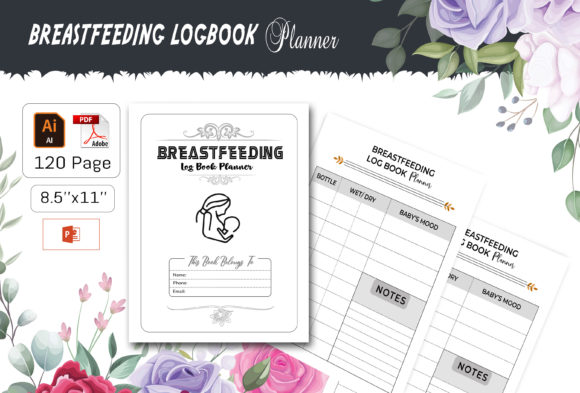
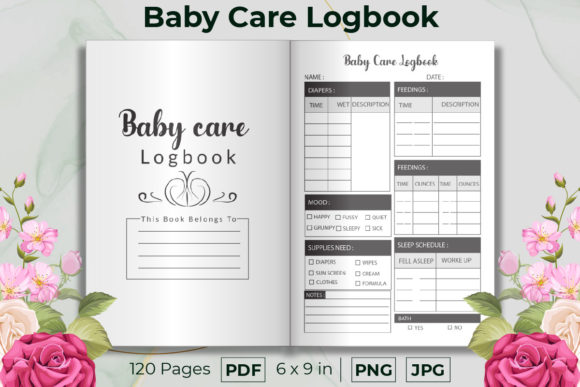
- Daily Log Pages: The workhorse of the book. These feature tables or sections for date, time, activity type (breastfeeding, bottle, diaper, sleep, medicine), duration, notes, and perhaps mood/behavior indicators.
- Milestone Trackers: Pages dedicated to recording first smiles, rolls, crawls, words, and other developmental achievements, often with space for photos or comments.
- Medical and Appointment Records: Charts for vaccination schedules, doctor visit notes, weight/height growth curves, and medication logs.
- Feeding and Sleep Summaries: Weekly or monthly overview pages that help visualize patterns over time, which is crucial for troubleshooting issues.
- Utility Pages: Notes sections for questions for the pediatrician, lists of favorite products, or contact information for caregivers.
An example that helps understand this naturally is a daily log page. Instead of a parent scribbling "fed at 3 PM" on a sticky note, the page presents a clear table. They can quickly mark: Activity: Bottle | Time: 3:15 PM | Amount: 4 oz | Notes: Seems fussy afterward. This structured entry is instantly more actionable and reviewable later.
Technical Specifications for KDP Success
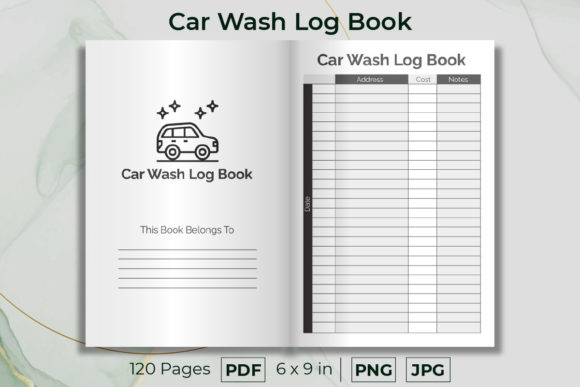
When creating an interior for KDP, the technical details are as important as the content design. The provided description mentions key specs: a 120-page PDF, high-resolution JPG and PNG files, and a 6x9 inch trim size. Each of these serves a specific purpose in the publishing process.
- PDF Ready to Upload: This is the primary file uploaded directly to KDP. It must meet Amazon's precise formatting requirements, including correct margins, bleed settings, and page count. The 120-page count suggests a substantial, comprehensive log.
- High-Resolution JPG & PNG: These image files are often included for marketing (to show sample pages on a sales listing) or for alternative uses, such as creating digital planners. High resolution ensures they look professional in any context.
- 6x9 Inch Trim Size: This is a popular and practical paperback size for notebooks and logs. It's large enough to be usable but still compact and portable for a diaper bag or nursery shelf.
The inclusion of "editable source files" (though not listed in the snippet but often implied) is a gold standard. It allows a buyer to customize the interior—change colors, fonts, or headings—before publishing, making the product versatile and valuable.
The Journey from Download to Published Book
Understanding how this KDP interior fits into the workflow of an aspiring publisher clarifies its broader relevance. A purchaser, perhaps a graphic designer or a mompreneur with an idea, downloads the interior package. They now have a complete, polished book layout that has already solved the complex design and formatting challenges. Their next steps might involve:
- Customization: Using the source files to add their own logo, adjust colors, or tweak wording to match their brand.
- Cover Design: Creating a compelling front cover, back cover, and spine that aligns with the interior's style.
- KDP Upload: Uploading the interior PDF and cover files to Amazon KDP, setting the price, description, and keywords.
- Launch: The book goes live on Amazon, available for parents worldwide to purchase as a physical paperback.
This process turns a digital template into a tangible product that fits into the daily activities of families. It bridges technology (digital design and e-commerce platforms) with the deeply human, analog need to record and cherish early childhood.
Common Misunderstandings and Clarifications
Several assumptions can cloud one's understanding of such products. First, that buying a KDP interior is "just buying a PDF." It is actually purchasing a ready-made business asset that saves hundreds of hours of design, layout, and testing. Second, that these logs are only for print. The high-resolution PNG and JPG files mean the designs can also be adapted for apps, digital journals, or other printable products, expanding their utility. Finally, a key point: a good baby log interior must balance structure with flexibility. It should guide the parent without being overly restrictive, allowing for notes and personal touches that make each log unique.
Building a Broader Understanding: The Ecosystem of Helpful Content
The creation and sale of a baby care log book KDP interior is a prime example of the E-E-A-T (Experience, Expertise, Authoritativeness, Trustworthiness) and Helpful Content principles favored by search engines and customers alike. The designer demonstrates experience by understanding the precise needs of recording baby data. They show expertise in graphic design and KDP formatting requirements. The product itself builds trustworthiness by being professional, complete, and error-free.
This fits into a larger ecosystem of informational search intent. Parents searching for "how to track baby feedings" or "baby log notebook" are looking for solutions. A well-optimized KDP listing for the final published book, or a sales page for the interior template, directly answers that need. The keywords are naturally semantic—"baby care log," "new parent organizer," "KDP interior"—because they describe the product's true function and format.
Ultimately, whether you are a parent seeking order in the beautiful chaos of infancy, or a creator looking to build a business by solving real-world problems, the baby care log book stands as a simple yet profound tool. Its transition into a professional, publishable KDP interior represents the fusion of care, creativity, and modern technology, offering help and organization to families everywhere.