The Professional's Guide to a Call Log Book: Avoiding Common Mistakes in Selection and Use
For anyone handling customer interactions, managing projects, or simply needing to track conversations, a physical Call Log Book is a surprisingly powerful tool. In a world dominated by digital apps, a dedicated notebook offers focus, reliability, and a tangible record that screens often fail to provide. Whether you're a freelancer tracking client calls, a small business owner documenting sales inquiries, or an educator logging parent communications, a well-designed log book can transform chaos into clarity.
Beyond Just Writing Down Numbers: What a Call Log Book Really Does
Many people misunderstand the purpose of a call log. It’s not merely a list of phone numbers and dates. A professional Call Log Book serves as a centralized system for capturing the context and outcome of every conversation. This includes action items, follow-up deadlines, key details discussed, and the emotional tone of the call. This depth of recording prevents the "I forgot what they said" syndrome and creates an invaluable paper trail for accountability and service improvement.
The Critical Mistake: Using Any Random Notebook
A common error is grabbing a generic notepad. Without predefined fields, you end up with inconsistent entries—some calls logged with a time, others without; some with next steps, others just a name. This inconsistency makes retrieving information later a frustrating hunt. The lack of structure encourages sloppy record-keeping, which directly affects your efficiency and ability to follow up professionally.
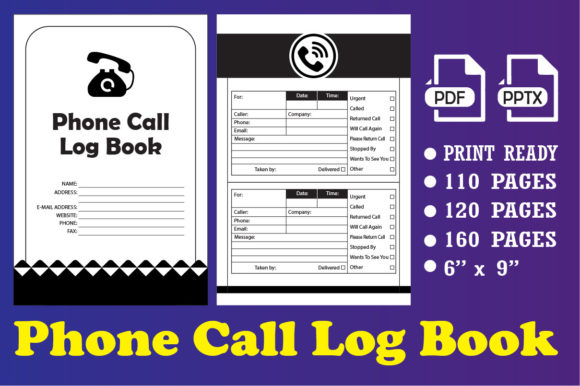
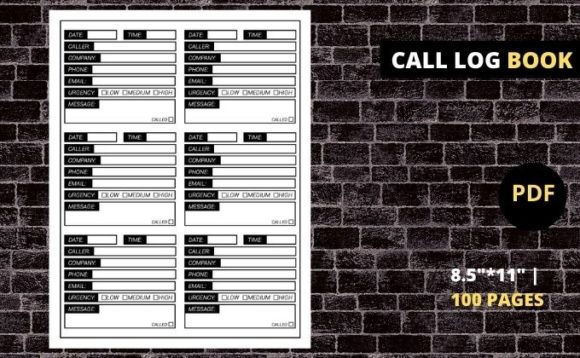
The better approach: Use a book specifically designed as a Call Log Book. Look for layouts with dedicated, labeled columns for Date, Time, Contact Name, Phone Number, Purpose of Call, Notes/Actions, and Follow-up Date. This uniformity turns logging into a quick, reliable habit, ensuring every vital piece of information is captured systematically.
Choosing a Call Log Book: The Details Most People Overlook
When selecting or downloading a template, professionals often focus only on the interior layout. However, several technical and practical specifications profoundly impact the final usability and quality, especially if you plan to print it yourself.
Ignoring the Print-Ready Specifications
You might find a beautiful Call Log Book interior design online, but if it's not prepared correctly for printing, your results will be disappointing. A key specification is CMYK Color Mode. Designs created in RGB (used for screens) can look dull or off-color when printed commercially or on some home printers. A true print-ready PDF should be in CMYK to ensure the colors you see are the colors you get on paper.
Another essential is the dimensions. The standard 8.5" x 11" (US Letter) size is not only compatible with most home printers and binders but also provides ample space for detailed notes without feeling cramped. Choosing a non-standard size can lead to printing hassles, misaligned pages, and difficulty finding a suitable binder or cover.
Skipping the Page Count and Sequence Assessment
A Call Log Book with 100 pages offers a balance between capacity and portability. Beginners often underestimate how many calls they log. A book with too few pages becomes obsolete quickly, forcing you to manage multiple volumes. Conversely, a 300-page book might be unwieldy. Check the page sequence: does it include a title page, instructions, or index pages? These extras add functionality. A simple, clean PDF with 100 dedicated log pages is often the most practical and cost-effective choice.
Practical advice: Before downloading or purchasing a template, verify the seller or creator explicitly states it includes PDF files ready to upload and print. This means the files are single, high-resolution documents with proper margins, CMYK color, and correct sizing, requiring no additional design work from you. It’s the difference between a product and a project.
Optimizing Your Call Log System for Maximum Benefit
Even with a perfectly designed book, users can fall into habits that reduce its effectiveness.
The Incomplete Entry Trap
The biggest operational mistake is filling out only half the fields. For example, writing the contact's name but skipping the "Purpose of Call" column. Weeks later, that entry is meaningless. The incomplete data affects your ability to analyze call patterns, measure workloads, or prepare for follow-up conversations.
A realistic correction: Treat each field as mandatory. If a call was "for billing question," write that. If the action is "send proposal by Friday," record it. Use the Notes section liberally for nuances—"client seemed concerned about price, emphasized value." This transforms your Call Log Book from a simple list into a rich communication history.
Failing to Integrate with Digital Tools
Some view a paper log book as entirely separate from their digital world. This is a missed opportunity. The better approach is to use the physical book as your primary, immediate capture tool—its reliability and speed during a call are unmatched—then schedule the digital follow-ups it prompts.
For instance, after logging a call with a follow-up date, immediately transfer that date to your digital calendar. The paper book is your source; the digital tools are your action engines. This hybrid system leverages the benefits of both: the focus of paper and the reminders of technology.
What to Check Before You Commit to a Call Log Book
To make a decision you won’t regret, look beyond the first page preview.
- Review the entire PDF sample: Ensure every log page is consistently formatted and that additional pages (like a cover or instructions) are included if needed.
- Confirm it’s a modern and unique design: A clean, professional layout you enjoy looking at increases your likelihood of using it consistently. Cluttered, dated designs feel like a chore.
- Evaluate the paper quality if printing yourself: A good Call Log Book interior deserves good paper. For frequent use, consider a slightly thicker paper stock (like 24 lb or 32 lb) to prevent ink bleed and improve durability.
- Think about binding: Will you use it in a three-ring binder, have it professionally spiral-bound, or keep it as a stapled packet? The 8.5" x 11" dimensions offer flexibility for all these options.
Ultimately, a well-considered Call Log Book is more than a purchase; it's an investment in your professional communication, organization, and peace of mind. By avoiding the common pitfalls in selection and use, you ensure this simple tool delivers maximum value, turning every call into a tracked, actionable item and every conversation into a documented step toward your goals.