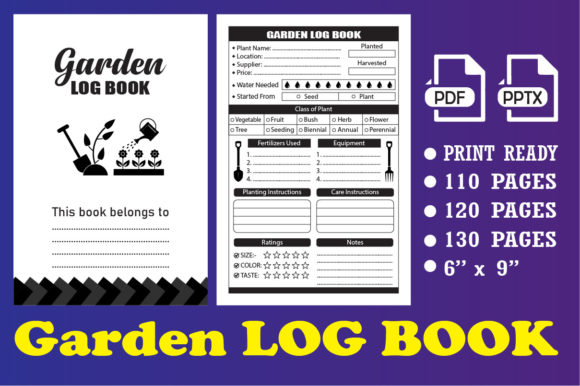
The Garden Log Book: Your Definitive Tool for Horticultural Planning and Documentation
Gardening is a dynamic and evolving process, blending science, observation, and art. For many, it moves from a casual hobby to a serious, rewarding pursuit. This progression often necessitates a shift from ad-hoc memory to systematic record-keeping. A dedicated Garden Log Book serves as the central hub for this transition, transforming scattered notes and seasonal experiences into a cohesive, actionable resource.
Understanding the Role of a Garden Log Book
A Garden Log Book is more than a simple notebook; it is a structured companion designed to capture the entire lifecycle of your garden. Its primary function is to document observations, decisions, and outcomes over time, creating a personalized reference manual specific to your plot, climate, and techniques. Where it fits into the broader process is at the intersection of planning and reflection. Before a season begins, it helps you map out layouts, crop rotations, and purchase lists. During the season, it becomes a daily or weekly journal for tracking growth, weather impact, and maintenance tasks. After harvest, it provides space for evaluating successes, analyzing failures, and planning improvements for the next cycle.
This continuous loop of record-keeping turns gardening from a reactive activity into a proactive project. It mitigates the common problem of forgetting what was planted where, which variety performed best, or when pests first appeared last year. By having these details systematically recorded, you build a valuable dataset that informs future decisions, saving time, money, and effort.
Integrating the Log Book into Your Gardening Workflow
Effective integration means making the log book an effortless part of your routine. The key is accessibility and consistent use. Many gardeners keep their log book alongside their physical tools—perhaps in a shed or on a patio table—or use a digital version alongside planning apps. The interaction with other tools is seamless: you might note the fertilizer application rates from a product booklet, sketch a bed layout inspired by a gardening magazine, or record rainfall data from a local weather station.
Practical Implementation: From Seed to Harvest
Consider the annual workflow. In winter, the log book is your planning canvas. Here, you can sketch garden bed designs, list seed varieties to order, and schedule indoor sowing dates. This preparatory stage ensures compatibility between your ambitions and the realities of space and season. When spring arrives, the book transitions to an operational journal. Daily entries might include soil temperature readings, germination dates for specific rows, and notes on early pest sightings.
As the season intensifies, usability and organization become critical. A well-structured log book with clear sections for different tasks—like watering schedules, pruning notes, or harvest yields—promotes efficiency. Instead of scrambling through loose papers, you have a single, consistent source of information. This is especially useful for tracking organic treatments or recording the exact date of a specific tomato variety’s first fruit, data that is invaluable for quality control in your gardening practice.
Long-Term Benefits and Knowledge Building
The true power of a Garden Log Book unfolds over years, not just seasons. Its long-term use creates a living history of your garden’s development. You can observe patterns, such as which crops consistently thrive in a particular micro-climate or how changing your compost mix affected soil health over three years. This historical data is irreplaceable and forms the foundation of expertise specific to your land.
For professionals, creators, or small business owners selling produce or offering gardening services, this documented history also supports business workflows. It can serve as proof of cultivation methods for clients, help in budgeting for supplies based on past usage, and improve the consistency of product quality. For educators and bloggers, the log book becomes a rich source of authentic content and case studies.
Factors for Successful Adoption
To integrate a Garden Log Book smoothly, focus on factors that encourage regular use. Choose a format that is physically robust and suitable for outdoor conditions if needed. The dimensions, such as the portable 6" x 9" size, should be convenient for carrying. High-resolution, clear interior layouts with ample writing space prevent frustration and ensure entries are legible for future reference.
Start simple. Don’t feel obligated to fill every page daily. Even brief, consistent notes are more valuable than elaborate entries made sporadically. Use it to answer practical questions: What did I plant here last year? When did I last fertilize these roses? Which zucchini variety yielded the longest? This practical, process-oriented approach makes the tool a natural ally rather than an administrative burden.
Beyond the Garden: A Tool for Holistic Project Management
The principles embodied in a Garden Log Book—planning, execution tracking, outcome analysis—translate to many areas. Hobbyists, freelancers, and productivity-minded users can appreciate its structure as a metaphor for managing any complex project. It teaches the discipline of recording actions and results, a habit that improves execution in creative processes, learning activities, and personal goals. While the content is horticultural, the framework is universal: define your plan, record your actions, observe the results, and iterate based on evidence.
Ultimately, a Garden Log Book is an investment in the quality and enjoyment of your gardening journey. It moves you from relying on guesswork and fading memory to employing informed strategy and accumulated wisdom. By providing a dedicated space for the before, during, and after phases of your horticultural work, it ensures that each season builds upon the last, leading to a more thriving garden and a more satisfied gardener.