Project Schedule: Your Blueprint for Getting Things Done
You know that feeling. You have a big project looming, whether it's launching a new book on Amazon KDP, renovating a room in your house, or coordinating a community event. At first, it's just an exciting idea. Then, the reality sets in: the dozens of tasks, the deadlines, the dependencies. Suddenly, the excitement is mixed with a dose of anxiety. How do you turn that sprawling idea into a manageable, step-by-step plan? This is where the concept of a Project Schedule becomes your most valuable tool.
A Project Schedule isn't just a fancy calendar or a list of to-dos. It’s the operational blueprint for your entire endeavor. It breaks down your vision into sequential, actionable tasks, assigns timeframes, and often allocates resources. It answers the critical questions: What needs to be done? Who is doing it? When does it need to be finished? By visualizing the entire workflow from start to finish, it transforms ambiguity into clarity and chaos into order.
The Universal Utility of a Project Schedule
The beauty of a Project Schedule is its adaptability. It’s not confined to corporate boardrooms or complex engineering projects. Its principles are universally applicable, serving as a structured thinking tool for almost any coordinated effort.
For Authors and Creative Entrepreneurs
If you're an author using Kindle Direct Publishing (KDP), your "project" is your book. A Project Schedule here might map out the entire self-publishing journey. Week 1: Final manuscript edit. Week 2: Cover design and formatting. Week 3: ISBN acquisition and blurb writing. Week 4: Upload and launch. Having this schedule prevents you from getting lost in the creative process and missing key administrative steps, ensuring your book moves from draft to marketplace smoothly.
For Home and Personal Projects
Consider planning a significant home garden overhaul. A Project Schedule could sequence tasks like soil testing, purchasing seeds and tools, building raised beds, planting by season, and setting up irrigation. It considers weather windows and plant growth cycles, turning a seasonal wish into a monthly and weekly action plan. Similarly, planning a family reunion or a large personal celebration benefits immensely from a schedule that tracks invitations, vendor bookings, and preparation tasks against a fixed date.
For Freelancers and Small Business Owners
Managing multiple client projects simultaneously is a classic challenge. A master Project Schedule, or individual schedules for each client engagement, helps you allocate your time transparently. It allows you to see when drafts are due, when client review periods are, and when final deliveries are scheduled, preventing overlaps and ensuring you meet all your commitments without last-minute panic.
Key Considerations Before You Build Your Schedule
Jumping straight into filling out dates can lead to a flawed plan. A little upfront thinking makes your Project Schedule robust and realistic.
First, define the project's scope clearly. What exactly is the end goal? "Launch a website" is vague. "Launch a five-page website with contact form and blog integration by June 30th" is scoped. The schedule depends on this clarity.
Next, identify dependencies. Which tasks cannot begin until another is finished? You can't upload your book interior to KDP (task B) until it's fully formatted and proofed (task A). These dependencies create the critical path of your project and dictate the true timeline.
Finally, be honest about resources. Do you have the time, skills, and tools to complete each task yourself? If not, does your schedule include time for hiring help, learning a new skill, or purchasing a resource? A schedule that doesn't account for resource constraints is just an optimistic wish list.
How a Pre-Formatted KDP Project Schedule Tool Accelerates Your Process
While you can sketch a schedule on paper or in a simple spreadsheet, using a professionally designed, pre-formatted tool like a dedicated KDP Project Schedule interior offers distinct advantages, especially for repeated use. Think of it not just as a template, but as a ready-to-deploy system.
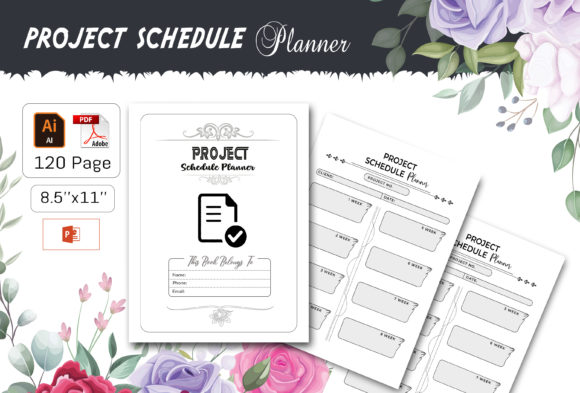
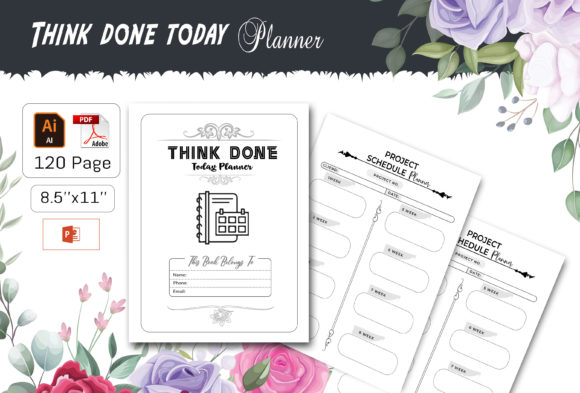
Such a tool, designed for US Letter size (8.5 x 11 inches) and fully editable, removes the initial design hurdle. You aren't spending hours creating tables, choosing fonts, or laying out pages. Instead, you start with a clean, print-ready, and visually coherent structure. The 100 pre-formatted vector shapes are resizable and editable, allowing you to customize the schedule's look—changing colors to denote different task types or priorities—without any graphic design expertise. Whether you print it out to pin on your office wall, work with it digitally in PowerPoint, or hand it off to a print shop for professional binding, the format is already optimized.
The inclusion of multiple file formats (AI/EPS for deep vector editing in Illustrator, PPT for easy text manipulation in PowerPoint, JPEG for quick references, and a ready-to-upload PDF) provides flexibility. You can make broad structural changes in Illustrator or simply fill in text boxes in PowerPoint, depending on your comfort level. The 120-page structure offers ample space not just for the main timeline, but for ancillary planning: resource lists, contact pages, budget tracking, and notes sections, making it a comprehensive project hub.
Adapting the Tool for Different Users and Industries
A student might use this Project Schedule to plan their final thesis year, using each page for a chapter's research, writing, and revision timeline. A small bakery owner could adapt it to schedule the launch of a new product line, tracking recipe development, packaging design, marketing material creation, and the launch event. The core framework—tasks, dates, progress tracking—is the same; the application is unique to the user's world.
The no bleed design is a practical feature for home or office printing. It means all content is safely within the standard page margins, so you can print it on any desktop printer without worrying about edges being cut off. This makes the tool truly accessible for immediate use.
Observations on Strengths and Potential Limitations
The primary strength of a formal Project Schedule, especially a quality template, is its power to externalize and commit. It takes the plan out of your head and puts it into a tangible, shareable format. This reduces cognitive load, creates accountability, and facilitates collaboration if you're working with a team. Seeing a task marked "complete" provides a psychological reward that fuels momentum.
A potential limitation to acknowledge is that any schedule is a forecast, not a prophecy. Unforeseen events—a key person becoming unavailable, a supplier delay, a personal emergency—will impact the timeline. The value of the schedule isn't in its perfect prediction, but in providing the baseline. When disruptions occur, you have a clear map to see what's affected and can adjust the plan systematically, rather than reacting in confusion. The editable nature of a digital template makes these adjustments straightforward.
Also, a schedule requires maintenance. It's a living document. The most common pitfall is creating a beautiful schedule at the start and then never updating it as progress is made or changes happen. The tool's usefulness is directly proportional to your engagement with it. The ease of editing in a provided PPT or AI file encourages this ongoing interaction.
Moving From Idea to Action
Ultimately, a Project Schedule is about bridging the gap between intention and execution. It gives form to your effort. Whether you're a solo creator managing a KDP publishing project, a community organizer, or someone tackling a complex personal goal, having a visual, temporal map of your journey increases your confidence and control. A well-structured, adaptable tool removes the friction of creating that map yourself, letting you invest your energy directly into the tasks that matter—the tasks that will bring your project from schedule to reality.